UNFAIR GAME SHOWS
Guy Montgomery’s Guy Mont Spelling Bee
(+HR=E / ABC)
Maybe the funniest show I watched all year. Constantly tricking comedians into having to spell impossible words was a joke that never got old, but the real highlight were Guy’s word definitions and using the word in a sentence.
Only Connect
(BBC)
This will always be my favourite trivia show. Every round is about making connections between four clues, and each of the four rounds makes connections in a different way. What a pleasing meta-structure. If you’ve played NYT’s Connections, that was lifted, entirely unchanged, from this show.
The Most Upsetting Guessing Game in the World
(Grouse House)
Also maybe the funniest show I watched all year. Party quirks but the quirks are so obscure and convoluted that it takes over an hour to guess them all. Watching the players grow increasingly exasperated over the course of an episode is absolutely sublime.
GAMES THAT PURPOSEFULLY OBFUSCATE THEIR MECHANISMS IN A WAY THAT EVOKES THE FEELING OF DISCOVERING AN ALIEN CULTURE
City of Six Moons
(Designed by Amabel Holland, published by Hollandspiele)
This game speaks to me in a way no other game ever has. The way it portrays game mechanisms as a language all their own is basically a showcase of the reason I love games. I wrote about it as my favourite game of the year for Polygon.
(Designed by Blaž Urban Gracar, published by Letibus Design)
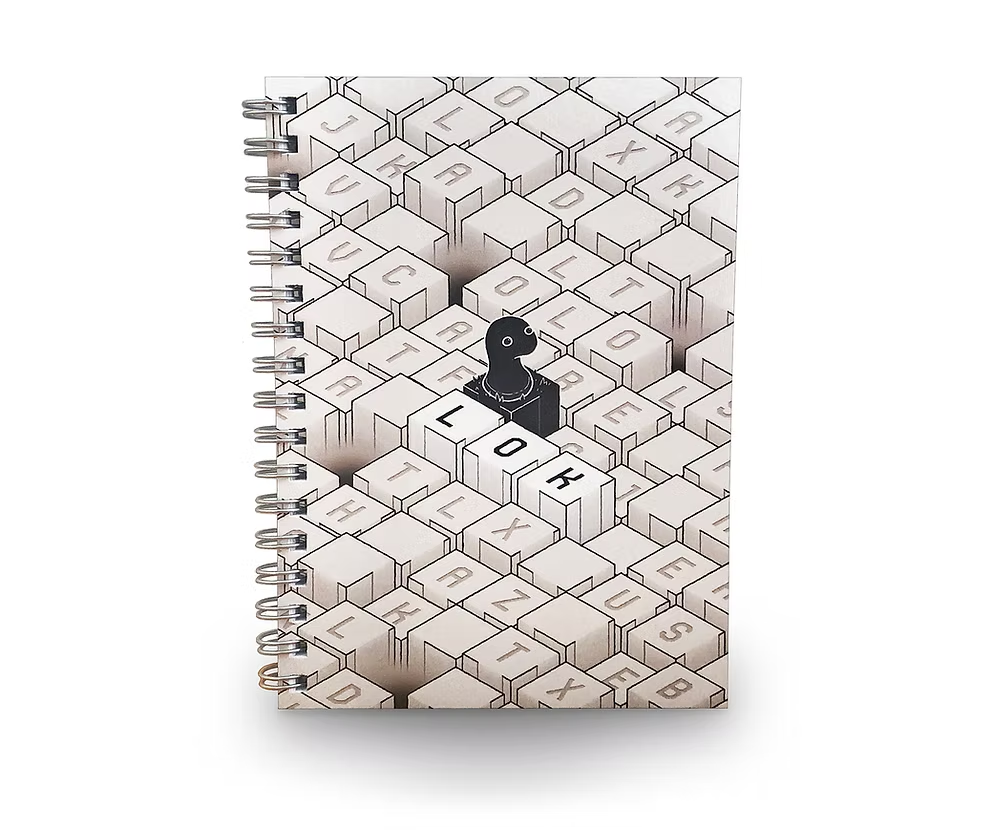
This little book was an absolute delight from start to finish. I love engaging with letters in the abstract, from Scrabble to cryptic crosswords. My brain just kinda eats it up. The fact this game has you deduce its rules makes it all the more compelling. The puzzles were often devious and always satisfying to solve.
Mooncat (UFO 50)
(Directed by Eirik Suhrke, additional design by Ojiro Fumoto, published by Mossmouth)
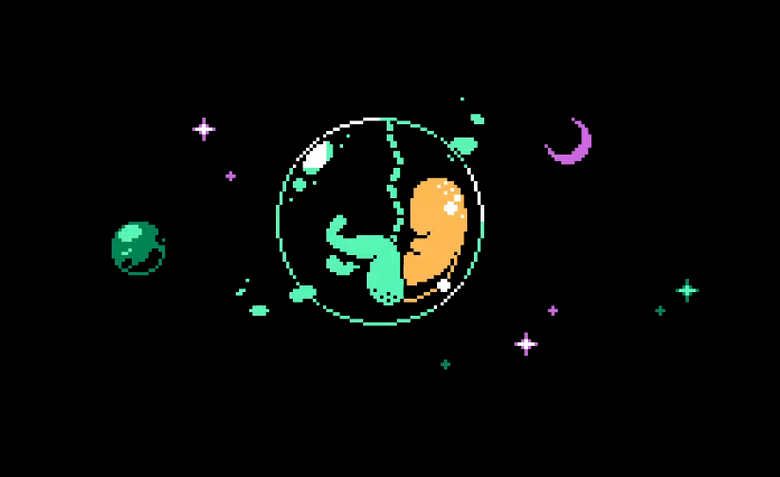
My first few minutes with this game were like nothing else I’ve ever experienced. It’s like picking up a controller for the first time. Making mistakes in Mooncat made me laugh every time. The simplest jump became a brain-scrambling puzzle. The design of the world, characters and music all add to this feeling of a place that is completely alien, but also incredibly charming.
PRE 20TH CENTURY GAMES
Cribbage
(Designed by Sir John Suckling, first published by John Cotgrave)
I learned cribbage a few years ago, but only started seriously playing it this year. I’m absolutely in love with the decision point of what to put into the crib. What seemed obvious at first gained more nuance as I played more. You can second guess your opponent, work out the optimum move, or take a risk and hope for the best. What a beautiful dance.
Hnefatafl
(Unknown)
Discovering the nuances of this game with a friend was a gaming highlight of the year. I love the symmetrical movement of pieces paired with the asymmetrical starting positions. Working out the king’s advantage together and trying out different rules variants. My friend thinking he’d figured out an impenetrable defence only to be completely breached. A fascinating game.
MYSTERY GAMES WITH IMMACULATE VIBES
Animal Well
(Developed by Billy Basso, published by Bigmode)

A lil egg guy. He’s jumping around the well. Everything is dark but also neon. There’s big old animals everywhere. There’s secrets even more everywhere. But then there are bigger secrets? Even more everywherer? What does the duck want? What is the clock for? I didn’t discover everything. I can’t discover everything. I love that for me.
Lorelei and the Laser Eyes
(Developed by Simogo, published by Annapurna Interactive)
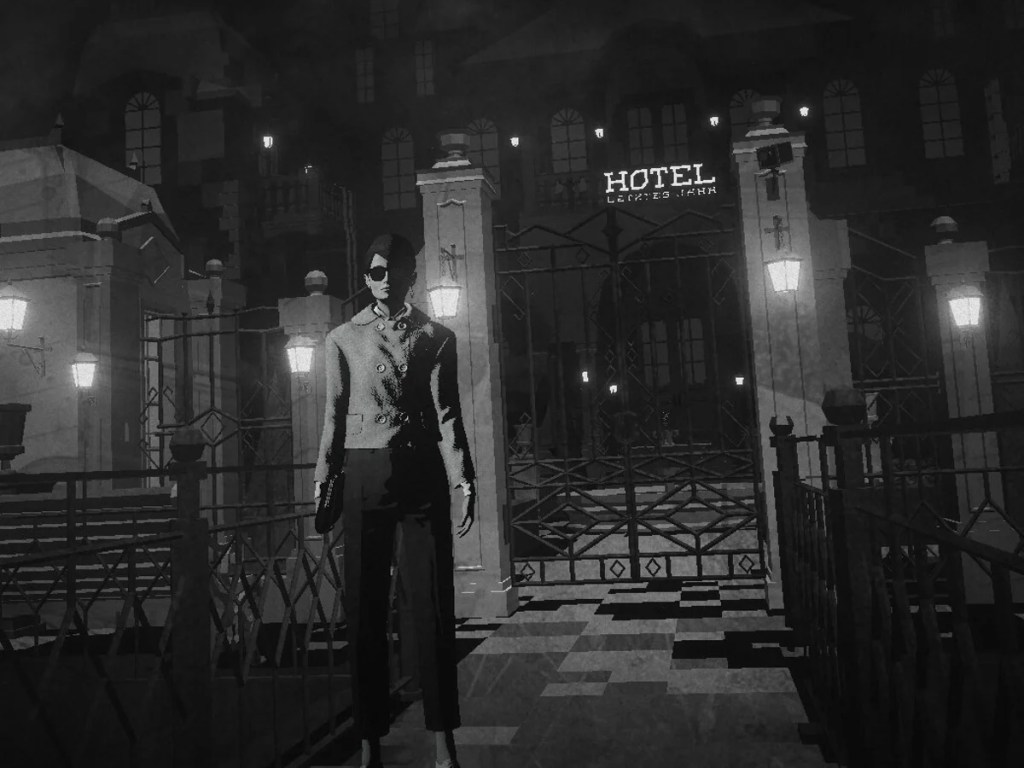
I drive to a spooky mansion. I can’t remember why. Everything is locked. It’s weird, but also very cool and mysterious, and the puzzles are compelling and the narrative is unfolding and then (spoilers) I cry. Art is good.
The Rise of the Golden Idol
(Designed by Andrejs & Ernests Kļaviņš, developed by Color Gray Games, published by Playstack)
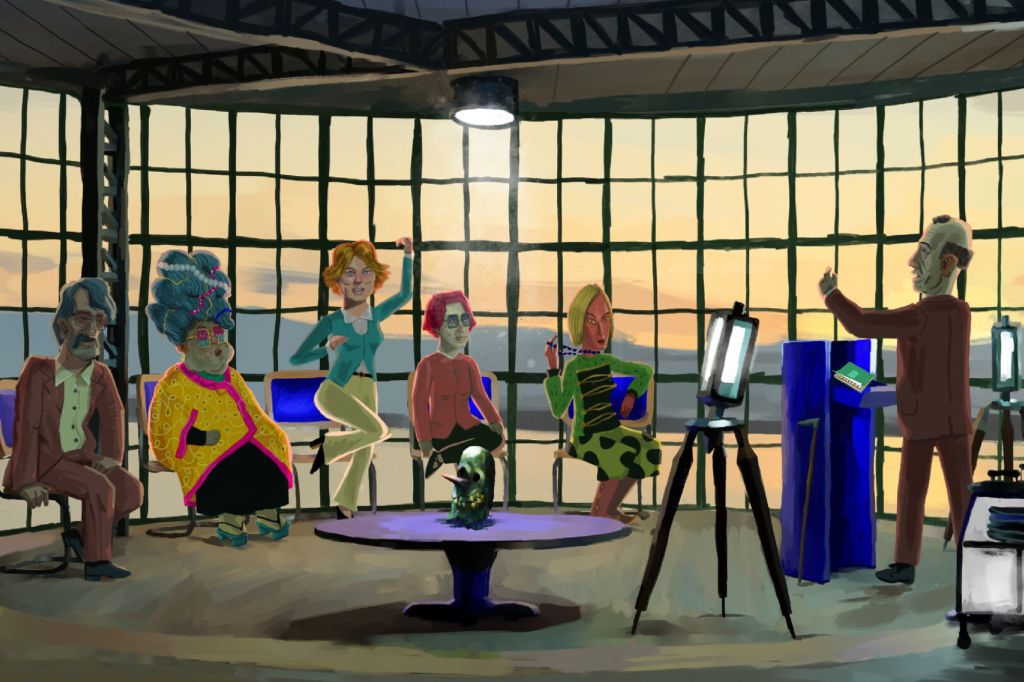
The Golden Idol games have great puzzles, but I think the thing I like most about them is the narrative misdirection and recontextualisation that happens throughout. You think you know what’s going on, and then some new information arises and you go ‘ohhhHHHHH!!’ and it makes me feel a certain kinda way. An enjoyable kinda way. Plus, the art and music are beautifully gnarly.
GAMES IN WHICH I ROLEPLAYED AS AN ANIMAL WHO WAS DISTRACTING THEMSELF TO AVOID DEALING WITH PRETTY BIG ISSUES
Velocirapture
(Designed by Xoe Allred, published by Hollandspiele)
I spent several minutes in this game advocating for another player to win a cooperative mini-game we were playing. Then we made a pact that whoever lost a mini-game would be killed and, after losing, I played dead for another several minutes. This game had me playing in ways no other game has, and made me engage with games and the concept of play in ways no other game has. A very silly masterpiece.
Wanderhome
(Designed by Jay Dragon, published by Possum Creek Games)
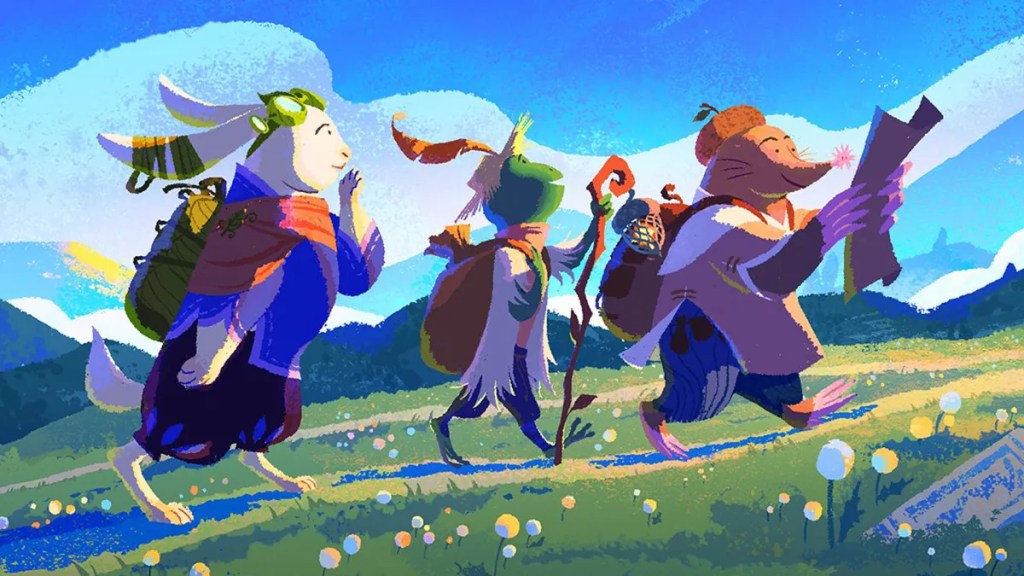
I picked this up at PAX Unplugged 2023 and it was the first and only TTRPG book to make me cry. The playbooks kept reminding me I have a purpose, I am alive, and I care. The game itself allowed me and my group to explore a world with conflict and unfairness but no war or violence. I played a jackal who lied constantly and tried to avoid all their problems, but found home when they couldn’t keep running. An incredibly beautiful game.
GAMES CALLED ‘____Y HOUSE’ ABOUT BUILDING A COMMUNITY OF FRIENDS AND TRYING TO PUT ON THE BEST PARTIES WHILE AVOIDING BEING BUSTED BY THE COPS
Party House (UFO 50)
(Directed by Jon Perry, published by Mossmouth)
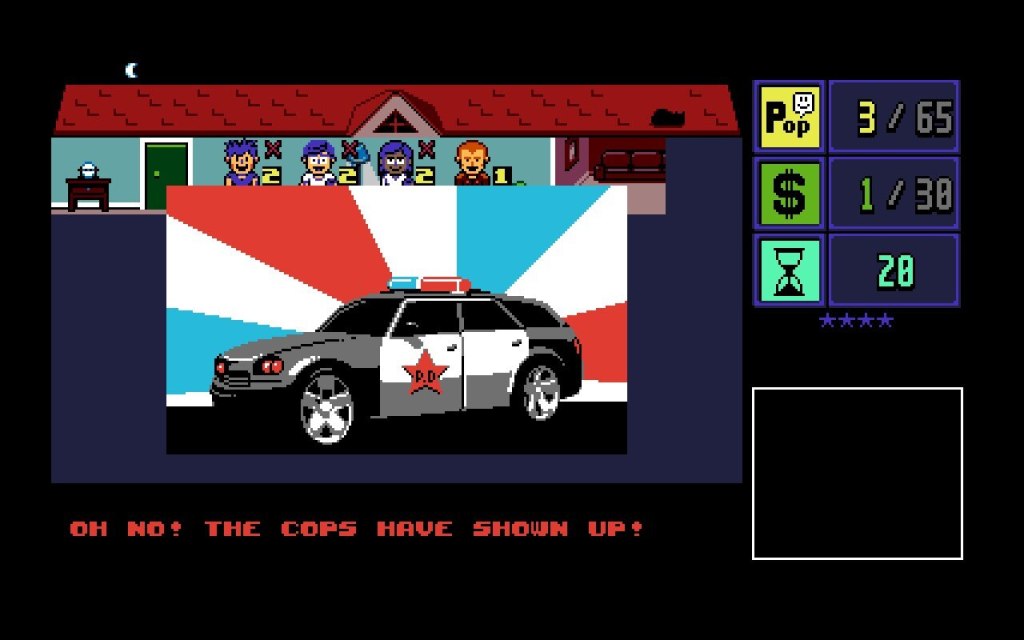
This game feels like an old version of Molly House that took a different turn along the way. I’m incredibly glad and grateful to see more games using their mechanics to explore the dynamics of interpersonal connections and communities rather than violent conflicts. This game is a true gem.
JUST KIND OF REALLY GREAT GAMES THAT I CAN’T THINK OF A COMBINING THEME FOR
Arcs
(Designed by Cole Wehrle, published by Leder Games)

Much smarter people than I have expounded on this game’s mechanical ingenuity. However, for me, the real magic trick of Arcs is the ways in which the Leaders and Lore, and even moreso the campaign, build upon the very solid foundations of the base game. Cole’s previous Leder projects have entangled players’ incentives in really interesting ways, but the Arcs campaign feels even more capacious. In Root it’s rare to go a full turn without attacking each other. An Oath game may have a few campaign actions. In my first Arcs campaign, we went two full games without a single roll of combat dice, because of the ways in which our incentives happened to overlap with each other. The game was fully interactive, but it made sense for us to make deals and agree not attack each other, and the ways in which we avoided conflict were as, if not more, interesting to me than the ways in which wargames usually force players to fight.
Daybreak
(Designed by Matt Leacock and Matteo Menapace, published by CMYK)

A truly wonderful and sincerely hopeful game that shows the incredible power of global cooperation and the absolute, non-negotiable requirement of stopping carbon emissions right now, this very second, and no later. The true question I was left with is: how do we make this happen in real life?
Nawalli
(Designed by Gonzalo Alvarez, Will Rogers, published by Studio Tecuanis)
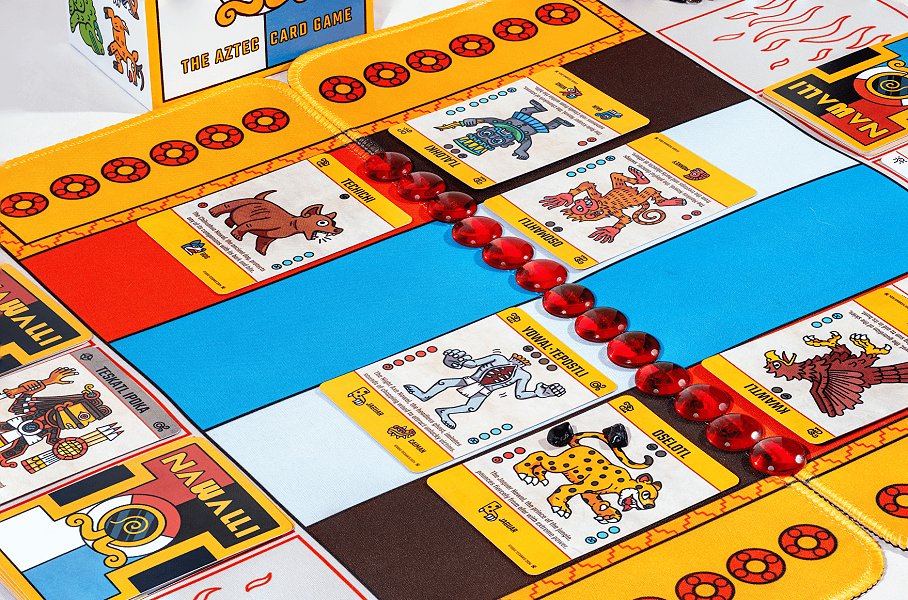
My brother is a pretty solid Pokémon TCG player, but has recently grown tired of the current meta, so I got him Nawalli for Christmas. This game feels really sharp, and I feel like we only scratched the surface of the combinatorial shenanigans it offers. I’m excited to explore it more.
Pax Penning
(Designed by Matilda Simonsson, published by Milda Matilda Games)

This game is a goofy little sandbox. It has the capacity for incredible pettiness and stolen victories, but also magnanimous generosity and cooperative wins. A wonderful showcase of the expansive potential of board games and the beauty of DIY productions.
HONOURABLE MENTIONS
Balatro
(Developed by LocalThunk, published by Playstack)
I grew a bit tired of this game, but I can’t ignore how much of it I devoured this year, and the soundtrack and aesthetics are enjoyably hypnotic.
Girls High School Mystery Class
(TVING)
Once I got past the sensory overload of the graphics, I was truly charmed by this show. Seeing the group bond over the course of the first two seasons, and overcome really challenging puzzles together, in which everyone contributed meaningfully, was so nice. Plus, the scope of the production, essentially turning a whole school into an intricate escape room, is an incredible feat.
(Designed by Sam Francis, published by Samphire Games)
This is an honourable mention only because of slight conflicts of interest. I’ve watched it grow from Sam’s initial prototype to a complete game (or actually three complete games), but seeing that process all the way through has been a joy. It’s a sharp and simple simulation of the allocation of resources during election campaigning, inviting you to decide which demographics to target and whether to double down on safe seats or fight over constituencies that could swing either way.
Scrabble
(Designed by Alfred Mosher Butts, manufactured by Mattel/Hasbro)
I have watched a lot of high-end Scrabble play online this year, and seeing games played by true masters has given me a new appreciation of how robust it is. It’s also been great to see how the game evolves as the official dictionaries add new words. QI was a game changer when it was added in 2006, and the new word UWU looks set to do the same.
Taskmaster
(Channel 4)
Taskmaster continues to be a delight. Watching the creativity and utter failures of the contestants, and marvelling at the ingenuity of the game design, leaves me looking forward to each new series. However, it was edged out by Guy Mont Spelling Bee and The Most Upsetting Guessing Game this year.
 Miasma Corp
Leave a comment